

Is Neck Pain Limiting Your Movement?
Do you experience persistent neck pain or stiffness after working, driving, or looking down at your phone for long periods? Some people also notice headaches, shoulder discomfort, or pain that spreads into the arms. When these symptoms begin to affect sleep, work, or daily movement, it may indicate an underlying cervical spine condition that requires proper assessment and treatment.

Author:
Dr Yong Ren is a Singapore-based orthopaedic surgeon practising at The Orthopaedic and Pain Practice, with clinics at Gleneagles Medical Centre and Mount Elizabeth Novena Specialist Centre.
Understanding Persistent Neck Pain
Neck pain and stiffness can develop gradually over time, especially in individuals who spend long hours working at a desk, driving, or frequently looking down at smartphones. In many cases, the symptoms are related to strain, age-related degeneration, or problems involving the discs and joints of the cervical spine.
As the condition progresses, persistent neck pain may begin to interfere with sleep, concentration, work performance, and daily movement. Some individuals may also develop headaches or pain, numbness, and weakness that spread into the shoulders or arms due to irritation of nearby nerves.
Early orthopaedic assessment helps identify the underlying cause of symptoms and determine whether conservative care, rehabilitation, or injection-based treatment may be appropriate depending on the severity of the condition.
Symptoms and Causes of Neck Pain
Many people initially assume neck pain is simply caused by “sleeping in the wrong position” or feeling tired after a long day. While mild discomfort can happen occasionally, persistent neck pain and stiffness are often linked to muscle strain, poor posture, age-related degeneration, or problems affecting the discs and joints of the cervical spine.
Long hours spent working at a desk, driving, or looking down at smartphones may gradually place excessive stress on the neck muscles and spinal structures over time. As the cervical spine becomes irritated or strained, symptoms may begin to affect movement and daily activities.
Some individuals experience a constant dull ache or stiffness, while others develop sharper pain when turning the head or looking down for prolonged periods.
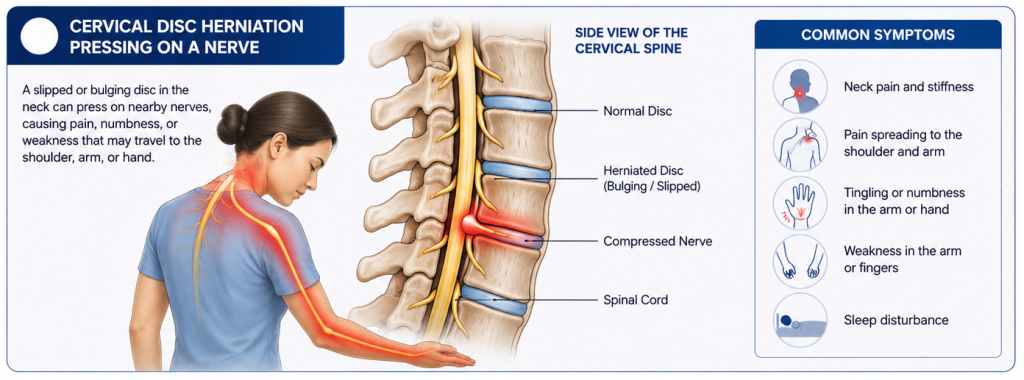
Common symptoms may include:
- Difficulty turning or tilting the neck
- Tightness or muscle spasms around the neck and shoulders
- Pain that worsens after prolonged sitting or screen use
- Headaches that begin from the neck area
- Pain spreading into the shoulders, arms, or upper back
- Tingling, numbness, or weakness in the arms in more severe cases
In some patients, underlying cervical disc degeneration or nerve compression may gradually worsen over time, leading to increasing pain, reduced mobility, or arm symptoms that begin to interfere with work, sleep, and daily function.
When Should You Seek Orthopaedic Assessment?
Orthopaedic assessment is particularly important when neck pain is accompanied by:
- Pain spreading into the shoulders or arms
- Tingling, numbness, or weakness in the hands or fingers
- Difficulty turning the neck comfortably
- Frequent headaches originating from the neck
- Symptoms that continue despite medication or physiotherapy
These symptoms may indicate irritation or compression involving the cervical discs, joints, or nerves. Proper assessment, together with imaging tests, when necessary, helps determine the underlying cause and whether conservative care, rehabilitation, injections, or, in select cases, surgery may be appropriate.
Injection-Based Options for Neck Pain
The most appropriate treatment for neck pain depends on the underlying cause and severity of the condition. Many individuals improve with medication, physiotherapy, posture correction, and activity modification. When symptoms continue despite conservative treatment, image-guided injections may sometimes be considered as a less invasive next step before more involved treatment is discussed.
These procedures are designed to help reduce inflammation or relieve nerve irritation without surgery. Depending on the condition, treatment options may include:
- Image-guided injections to reduce inflammation around irritated nerves or joints
- Targeted procedures to relieve chronic neck pain caused by inflamed cervical joints
Unlike the lumbar spine, where minimally invasive surgical techniques are a well-established alternative to open surgery, the cervical spine does not have the same range of minimally invasive surgical options. In the small number of patients with significant cervical disc problems or nerve compression who do not respond to injections or conservative care, surgery may be recommended — performed as conventional, open surgery rather than a minimally invasive procedure.
Careful orthopaedic assessment is important to determine which treatment approach is most appropriate, as not all patients with neck pain require procedural or surgical treatment.
What Recovery May Look Like
What Recovery May Look Like
Recovery after an image-guided injection is generally straightforward. Most patients are observed briefly after the procedure and can return home the same day, without the incision care or extended downtime associated with surgery.
Some mild soreness at the injection site or a temporary increase in symptoms can occur in the first day or two, and typically settles on its own. Patients are usually advised to take it easy for the rest of the day and gradually resume normal activity as tolerated.
Recovery may include:
- Resuming light activity the same or following day
- Gentle neck movement as advised
- Avoiding strenuous activity for a short period after the procedure
- Physiotherapy to improve strength and flexibility
- Follow-up visits to monitor response to treatment
Some patients experience relief after a single injection, while others may benefit from a short series of treatments alongside physiotherapy and posture correction. With proper follow-up care, many patients are able to return to daily activities more comfortably while supporting the long-term health and function of the cervical spine.
About Dr. Yong Ren
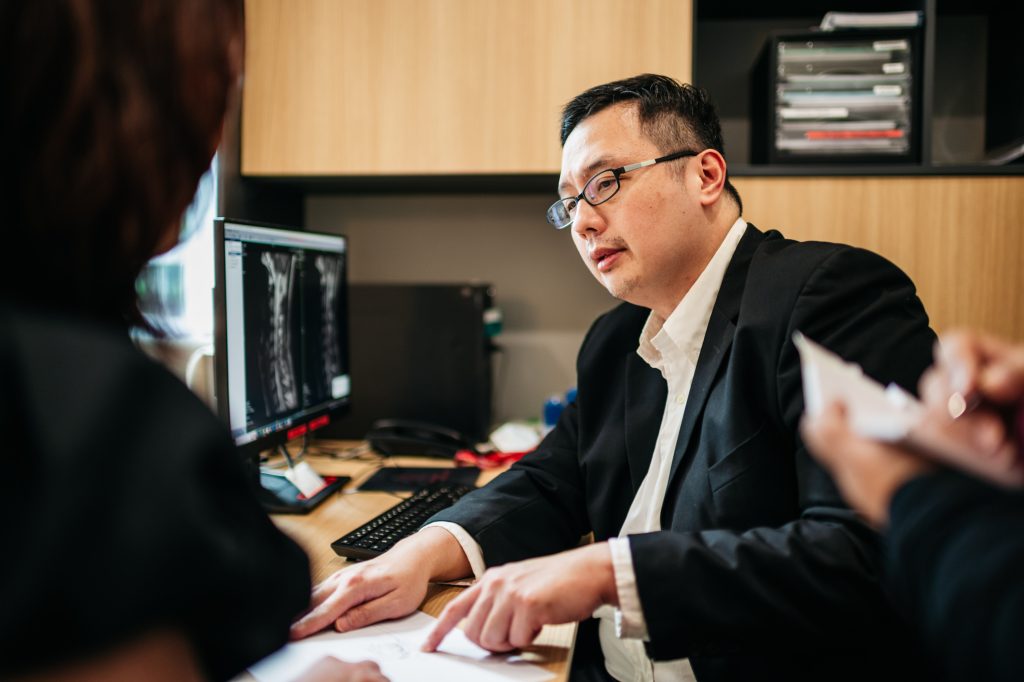
Dr Yong Ren is an orthopaedic spine surgeon with experience in the management of cervical spine conditions affecting the discs, joints, bones, and nerves of the neck. His clinical practice includes the treatment of persistent neck pain, cervical disc problems, nerve compression, spinal degeneration, and other conditions that may affect movement, function, and daily activities.
He received orthopaedic training in Singapore and further underwent subspecialty training in Switzerland. His experience includes both non-surgical and surgical management of spinal conditions, with treatment tailored according to the severity of symptoms and underlying spinal pathology.
Dr Yong Ren previously served as Head of Orthopaedic Trauma at Khoo Teck Puat Hospital in Singapore and is also involved in medical education as an Assistant Professor in orthopaedic surgery.
For patients with persistent neck pain who do not respond to conservative care, image-guided injections are often considered as a next step before surgery is discussed.
Indonesian patients travelling to Singapore are supported with dedicated Bahasa-speaking assistance for appointment coordination, consultation arrangements, and follow-up throughout the treatment journey.
Consulting Dr Yong Ren in Singapore for Neck Pain
Many Indonesian patients travel to Singapore specifically to consult Dr Yong Ren for persistent neck pain and cervical spine conditions. Singapore is a short flight from most major Indonesian cities, and Indonesian passport holders do not require a visa for short medical visits.
The length of stay depends on the type of treatment required. A consultation and assessment, including a review of imaging, can often be completed within a single visit of one to two days. Patients proceeding with an injection-based procedure may need to stay slightly longer to allow for observation and follow-up before returning home.
To help patients plan ahead, support is available for:
- Bahasa-speaking assistance for appointment coordination and consultations
- WhatsApp coordination for scheduling and pre-visit questions
- Preliminary review of MRI, X-ray, or medical records before travelling, where available
- Guidance on what to expect during the visit, including the likely number of trips required
This planning support is intended to help patients travelling from Indonesia feel prepared before their appointment, particularly when coordinating time off work or travel with family.
FAQs
Yes, poor sleeping posture or an unsuitable pillow can strain the neck muscles and joints. If the pain keeps returning, it may be worth checking the cervical spine.
Looking down for long periods places extra stress on the neck. This can cause muscle tightness, stiffness, and pain around the cervical spine.
Yes, some headaches can start from the neck, especially when the upper neck joints or muscles are irritated. The pain may spread to the back of the head, temples, or behind the eyes.
No, younger adults can also develop neck pain from posture, sports injuries, screen use, or disc problems. Age is only one of many possible factors.
Yes, certain movements or heavy exercises may worsen neck pain if done incorrectly. It is best to get proper advice before exercising if there is arm pain, numbness, or weakness.
Not every patient needs an MRI. The doctor may recommend imaging if symptoms persist or if there are signs of disc problems or nerve compression.