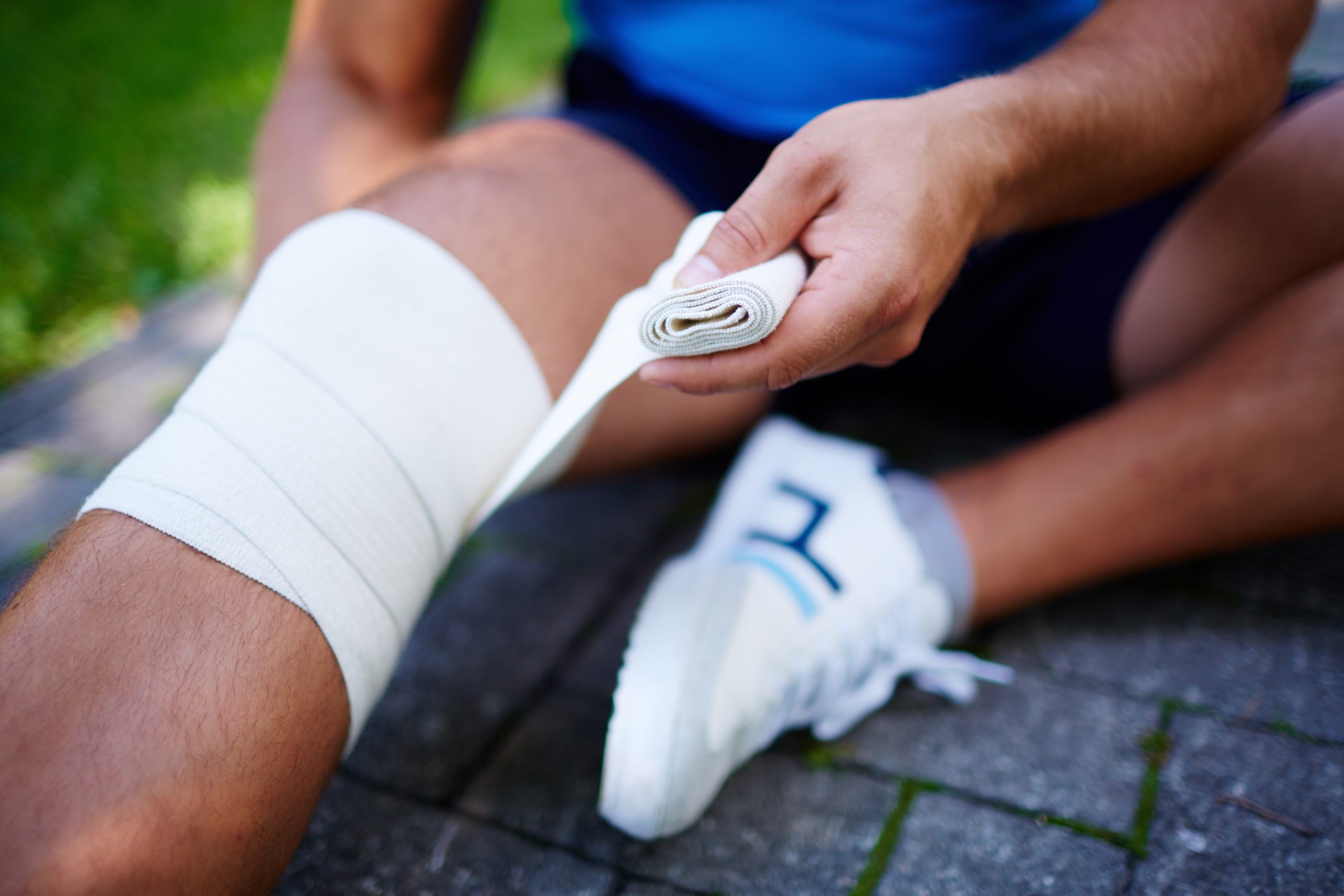
QUICK READ
Knee pain that lingers for weeks, a joint that catches or locks unexpectedly, or a nagging ache that gets worse when you squat or climb stairs — these are not just signs of ageing. In many cases, they point to a meniscus tear: one of the most common knee injuries seen in adults of all ages, including those who have never played sport.
This blog explains what a meniscus tear is, why the symptoms often keep returning despite rest, what happens if it goes untreated, and when keyhole surgery becomes the right step. It also covers what to expect if you travel from Indonesia to Singapore for treatment.
Dr Yong Ren is an orthopaedic surgeon practising in Singapore with fellowship training from Switzerland. He sees patients across the full range of knee conditions and is experienced in minimally invasive keyhole techniques. If your knee has not improved with rest and conservative care, keep reading or reach out via WhatsApp.

Author:
Dr Yong Ren is a Singapore-based orthopaedic surgeon practising at The Orthopaedic and Pain Practice, with clinics at Gleneagles Medical Centre and Mount Elizabeth Novena Specialist Centre.
What Is a Meniscus Tear — and Could You Have One?
Picture this: a woman in her fifties feels a twinge in her knee after squatting in the kitchen. It is not severe, so she assumes it is a simple strain. She rests, tries a massage, and waits for it to pass. But weeks later, the knee still aches, catches, and sometimes feels like it might give way. Sound familiar?
What she likely has is a meniscus tear, and it is more common than most people realise. Studies show that knee problems, including osteoarthritis and meniscal injuries, affect between 15% and nearly 25% of Indonesian adults.
Your meniscus is a pair of tough, C-shaped pads of cartilage that sit between your thighbone and shinbone. They act as shock absorbers, spreading body weight evenly and keeping the knee stable every time you walk, bend, or squat. When the meniscus tears — whether from a sudden twist or gradual wear — that cushioning is disrupted.
Symptoms That Point to a Meniscus Tear
- Pain when twisting or rotating the knee
- Swelling and stiffness that build over two to three days after injury
- A locking or catching sensation, as though something is stuck in the joint
- Instability — the knee feeling as if it might give way
- Difficulty fully straightening or bending the knee
Here is what many patients do not realise: much of the meniscus has very little blood supply, which means many tears simply cannot heal on their own. That is why rest and massage often bring only temporary relief, and why the same symptoms keep returning.
Who Is at Risk?
Meniscus tears are not just a sports injury. Most patients Dr Yong Ren sees are everyday people whose tears developed gradually, from squatting to pray, kneeling, lifting, or simply twisting awkwardly while standing. Age and body weight are also significant factors:
- Adults over fifty, as cartilage naturally becomes thinner and more vulnerable
- Those carrying excess body weight, which adds pressure on the knee
- People who kneel, squat, or climb stairs regularly for work or daily life
- Anyone with a history of previous knee injury
What Happens If a Meniscus Tear Goes Untreated?
A meniscus tear is not a life-threatening emergency, but it is not something to ignore either. Because the tear cannot heal on its own, leaving it untreated does not mean it stays the same. It means it gets worse.
The torn edge continues to fray with every step, squat, and staircase. Over time, this ongoing wear damages the joint surface beneath it. The protective cartilage thins, the bones begin bearing more load, and the risk of developing osteoarthritis increases significantly.
For many patients, the cost of delaying treatment includes:
- Symptoms that gradually affect more of daily life — walking, praying, playing with children, climbing stairs
- Progressive joint damage that is harder and more expensive to treat later
- A greater chance of eventually requiring a more extensive procedure, such as knee replacement
The encouraging news: when a meniscus tear is identified and addressed early, there are more options, and less invasive ones. Waiting rarely makes that picture better.
How Is a Meniscus Tear Treated?
Dr Yong Ren’s approach starts with the least invasive option that is appropriate for each patient’s situation. Not every meniscus tear requires surgery.
Non-Surgical Care First
For many patients, the first step is conservative management:
- Rest, ice, and activity modification to settle initial pain and swelling
- Pain relief medication such as paracetamol or anti-inflammatories
- Physiotherapy to strengthen the muscles supporting the knee
- A targeted joint injection in selected cases
These measures can meaningfully reduce pain and improve function in some patients. But when the knee continues to lock, catch, or give way, or when symptoms persist despite four to six weeks of conservative care — surgery becomes the sensible next step.
When Keyhole Surgery Is the Right Answer
The signs that a tear needs more than rest:
- Knee pain that has not improved after two to three weeks of rest and self-care
- A knee that repeatedly locks, catches, or gives way
- Difficulty walking, squatting, or fully straightening the leg
- Pain that disturbs sleep or prevents daily activities
Mechanical symptoms — locking and catching — are particularly important. These usually mean a torn fragment is physically caught inside the joint, which rest alone simply cannot resolve. This is where keyhole surgery offers a clear and effective solution.
How Keyhole Surgery Works
Knee arthroscopy — keyhole surgery — is performed through two tiny openings at the front of the knee, each less than a centimetre long. Through one, Dr Yong Ren inserts a slim, high-definition camera that projects a magnified view of the inside of the joint onto a screen. Through the other, fine instruments treat the tear under camera guidance.
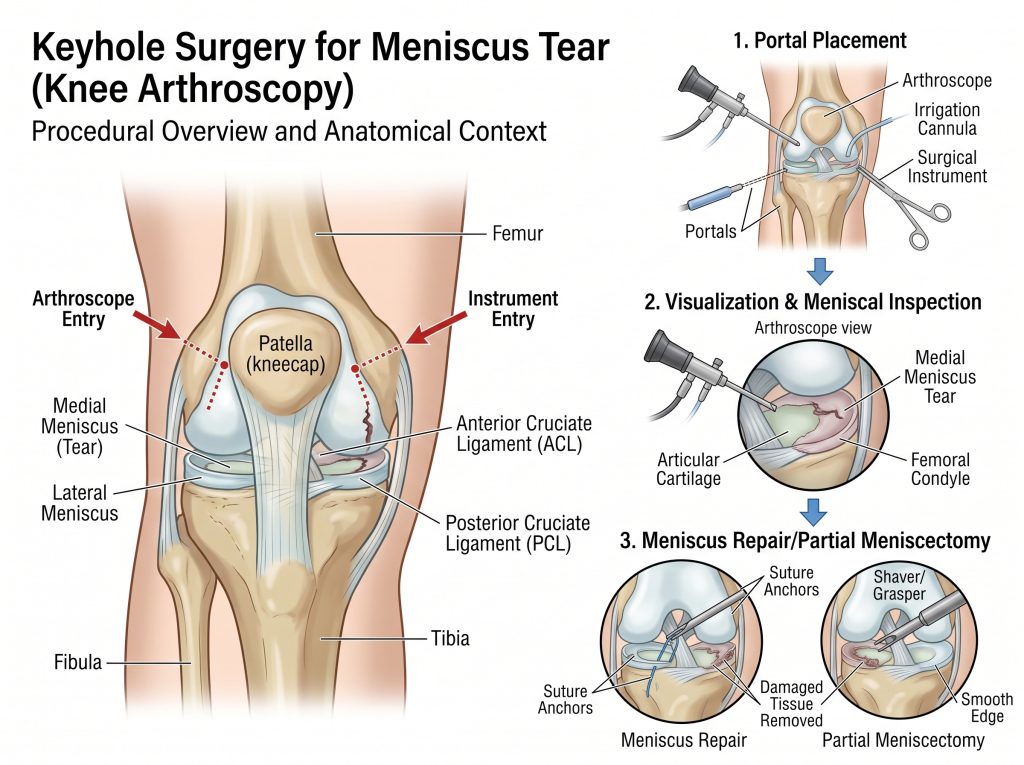
There is no need to open the knee widely. Working from this detailed view, Dr Yong Ren either gently trims the damaged cartilage (partial meniscectomy) or stitches the torn edges together so they can heal (meniscus repair), depending on the type and location of the tear. The whole procedure typically takes 30 to 45 minutes and is done as day surgery. Most patients go home the same day.
The practical benefits:
- Tiny incisions with minimal scarring and far less tissue damage
- Less pain, bleeding, and swelling compared to open surgery
- Lower risk of infection and complications
- Recovery happens largely at home, no lengthy hospital stay
Recovery and Your Journey Home
Recovery varies depending on the procedure and the patient. Most patients are walking soon after surgery, sometimes with crutches for a short while. Dr Yong Ren generally advises waiting 48 hours before flying, to allow the knee to settle.
For the flight home, a few simple steps make a real difference: wear the compression stockings provided, choose an aisle seat to allow gentle ankle movement, stay well hydrated, and keep the wound clean and dry.
Once home, physiotherapy is the key to a strong recovery. Dr Yong Ren provides a clear programme to follow with a local physiotherapist in Indonesia. Most patients return to desk work within one to two weeks. His team remains contactable throughout recovery, so distance never means being left without guidance.
Why Seek Treatment in Singapore?
Singapore is one of Southeast Asia’s most established destinations for orthopaedic care. Its specialists train to international standards — many with fellowships at leading institutions abroad — and operate with the clinical rigour and modern equipment that patients expect of a global medical hub.
For patients from Indonesia, Singapore offers:
- Short travel time from major Indonesian cities, with multiple daily flights
- Day-surgery procedures with no need for extended hospital stays
- Subspecialty orthopaedic expertise in a single consultation
- Bahasa-speaking concierge support throughout your visit
- A straightforward trip: consultation, any imaging required, and the procedure can often be done across two to three days
What Does Keyhole Knee Surgery Cost in Singapore?
Keyhole knee surgery (knee arthroscopy) in Singapore private practice typically ranges from SGD 15,000 to SGD 30,000, depending on whether the procedure involves trimming the meniscus (partial meniscectomy) or repairing it with sutures (meniscus repair), as well as the type of anaesthesia and complexity of your case. Surgeon and facility fees, as well as pre-operative consultation and imaging, may be additional.
A clear, personalised cost estimate is provided following your initial consultation, once Dr Yong Ren has assessed your knee and confirmed a treatment plan. There are no surprise charges, and his team can advise what to budget for the full Singapore visit.
Meet Dr Yong Ren
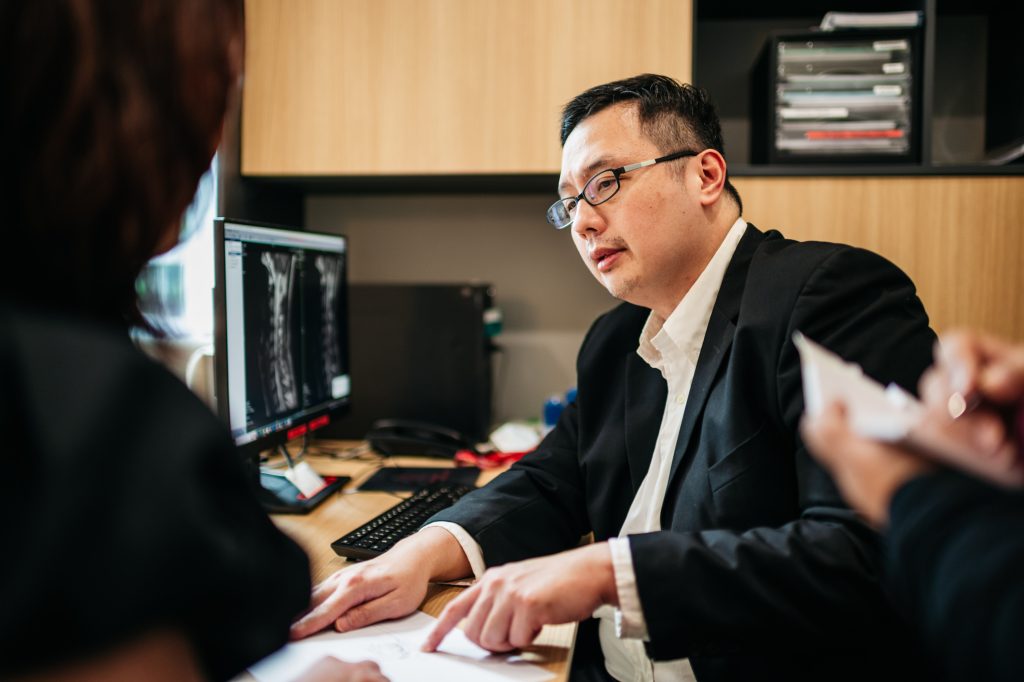
Dr Yong Ren is one of Singapore’s rare truly all-round orthopaedic surgeons. While most specialists in the field today focus on a single sub-specialty, he brings deep expertise across hip and knee surgery, pelvic reconstruction, spinal surgery, and fracture management — a breadth that gives patients a wider range of perspectives and options from a single consultation.
He graduated from the National University of Singapore’s Yong Loo Lin School of Medicine before completing his orthopaedic training locally. He then undertook subspecialty training at the renowned Inselspital in Bern, Switzerland — one of Europe’s foremost orthopaedic institutions. On returning to Singapore, he led the orthopaedic trauma team at Khoo Teck Puat Hospital, serving as head of the team until 2019. He continues as a Visiting Consultant to the hospital today.
Beyond clinical work, Dr Yong Ren has been deeply involved in medical education in Singapore: appointed Assistant Professor by the Yong Loo Lin School of Medicine, core faculty for orthopaedic resident training under the National Healthcare Group, and a member of the country council for the Singapore branch of AO Trauma, the internationally recognised body for surgical training in fracture care.
Qualifications & Memberships
- MBBS, National University of Singapore
- MMed (Orthopaedic Surgery)
- FRCSEd (Orthopaedic) — Fellowship of the Royal College of Surgeons, Edinburgh
- Member, AO Trauma International
- Member, Singapore Medical Association
- Visiting Consultant, Khoo Teck Puat Hospital
For Indonesian patients, Dr Yong Ren’s clinic provides Bahasa-speaking concierge support from first enquiry through to post-procedure follow-up, so every step of your visit feels clear and well-supported.
Take the Next Step
If your knee has been locking, catching, or aching for more than a few weeks — and rest has not helped — it is time to get it properly assessed. The earlier a meniscus tear is identified and treated, the better the outcome and the less invasive the options.
Frequently Asked Questions
About Meniscus Tears & Treatment
About Dr Yong Ren & the Clinic
Planning Your Trip from Indonesia
The keyhole surgery procedure itself typically ranges from SGD 8,000 to SGD 15,000 depending on the type of procedure and complexity. Consultation and pre-operative imaging may be additional. A personalised estimate is provided after your initial assessment. Dr Yong Ren's Bahasa-speaking concierge team is available throughout your journey — from the first enquiry through to scheduling and post-procedure follow-up.