

Lower Back and Leg Pain Affecting Your Movement?
Do you experience persistent lower back pain that travels down the leg? Tingling, numbness, or weakness in the leg can gradually make walking, sitting, or even sleeping uncomfortable. While some cases improve with rest or medication, ongoing symptoms may indicate irritation or compression of the spinal nerves that requires further assessment and treatment.
How Sciatica Affects Daily Life
Pain that travels from the lower back or buttock down the leg is commonly referred to as sciatica. Some people also experience numbness, tingling, or weakness that gradually begins to affect walking, sitting, sleep or daily activities.
Many people try to manage the discomfort on their own with rest, medication, or massage. However, when the underlying nerve irritation is not properly treated, the symptoms may continue or gradually worsen over time.

Author:
Dr Yong Ren is a Singapore-based orthopaedic surgeon practising at The Orthopaedic and Pain Practice, with clinics at Gleneagles Medical Centre and Mount Elizabeth Novena Specialist Centre.
Understanding Sciatica and Its Causes
Sciatica usually occurs when nerves in the lower spine become irritated or compressed. One of the most common causes is a herniated spinal disc, where part of the disc presses against a nearby nerve root. Age-related degeneration, spinal narrowing (spinal stenosis), bone spurs, or other structural changes in the lower back can also place pressure on the nerves.
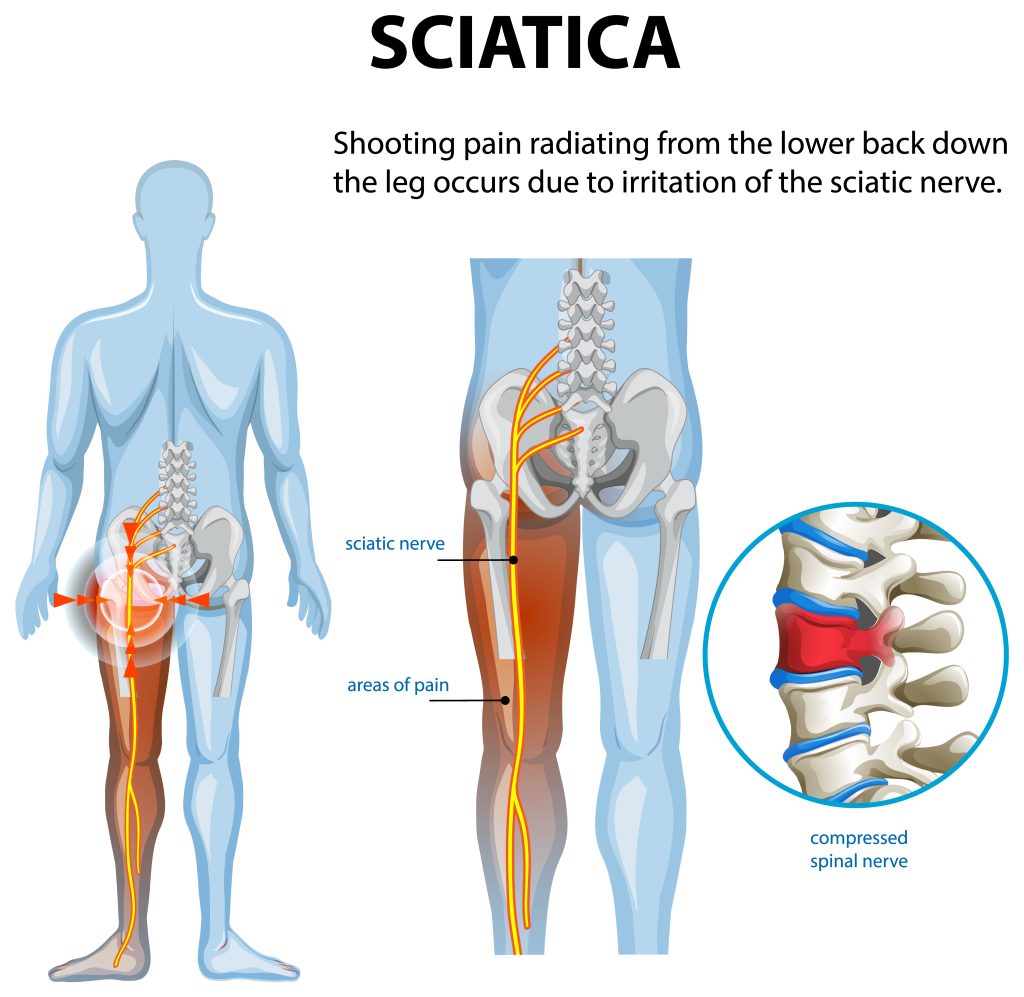
As the nerve becomes irritated, symptoms may begin to spread from the lower back or buttock down the leg. Some individuals experience sharp or burning pain, while others notice tingling, numbness, or weakness that gradually affects movement and daily activities.
Common symptoms may include:
- Pain that travels from the lower back down the leg
- Tingling or “pins and needles” sensation in the leg or foot
- Numbness in certain parts of the leg
- Pain that worsens with prolonged sitting
- Weakness when walking or lifting the foot
- Discomfort that becomes worse when coughing, sneezing, or bending
Depending on the severity of nerve compression, treatment may range from medication and rehabilitation to minimally invasive back pain injections that help reduce inflammation around the affected nerve. Surgical treatment is generally considered only when symptoms remain severe or progressive despite appropriate conservative treatment.
Why Orthopaedic Spine Assessment Matters
Because sciatica is commonly caused by structural problems in the lower spine, proper assessment is important to identify where the nerve compression is occurring and how severe it has become.
An orthopaedic spine specialist evaluates the spinal discs, joints, bones, and surrounding structures that may be placing pressure on the nerves. Imaging studies such as MRI scans are often used together with clinical assessment to determine the underlying cause of symptoms.
This helps guide the most appropriate treatment approach. While many patients improve with medication, physiotherapy, or minimally invasive back pain injections, some cases with significant nerve compression or persistent weakness may eventually require surgical treatment to relieve pressure on the affected nerve.
The goal of treatment is not only to reduce pain, but also to restore movement, function, and overall quality of life while avoiding unnecessary surgery whenever possible.
How Is Sciatica Treated?
Treatment for sciatica usually starts with simple, non-surgical methods to reduce pain and help the irritated nerve recover. Many patients improve with a combination of rest, gentle movement, physiotherapy, and medication. Making small lifestyle changes can also help reduce pressure on the lower back.
Common treatment options include:
- Physiotherapy and stretching exercises
- Pain-relief and anti-inflammatory medication
- Improving posture and daily movement habits
- Weight management and regular light activity
- Back pain injections such as epidural steroid injections
- Surgery for severe cases that do not improve with other treatments
If the pain continues despite medication or therapy, back pain injections may be recommended. These injections place anti-inflammatory medicine near the irritated nerve to help reduce pain, improve movement, and make daily activities more comfortable again.
How Back Pain Injection Treatment Works
Many patients feel worried when they hear the word “injection,” especially when it involves the spine or lower back. In reality, back pain injections for sciatica are very different from regular injections such as vaccinations or injections given during childbirth. The goal is not simply to “block pain,” but to deliver anti-inflammatory medication directly near the irritated spinal nerve that is causing the symptoms.
One commonly used treatment is an epidural steroid injection. During this minimally invasive procedure, medication is carefully placed near the affected nerve root in the lower back to help reduce inflammation and irritation. The procedure is usually performed using imaging guidance to support procedural accuracy and safety. Most patients can return home on the same day after a short observation period.
Back pain injections may help:
- Reduce inflammation around the compressed nerve
- Relieve shooting leg pain, numbness, or tingling
- Improve comfort when sitting, walking, or sleeping
- Make physiotherapy and rehabilitation easier
- Reduce the need for long-term oral pain medication
- May be considered as part of a broader non-surgical treatment plan in selected cases
While the injection may not permanently “cure” the underlying spine condition, some patients may experience temporary symptom improvement after the injection, depending on the underlying condition and individual response.
Recovery After Back Pain Injections
Recovery after a back pain injection is usually quick, and most patients can return home on the same day. Mild soreness or temporary discomfort around the injection area may occur, but this often improves within a few days.
Some patients feel improvement within days, while others may take one to two weeks to experience the full benefit of the injection. The aim is to reduce pain, improve movement, and help patients return to daily activities more comfortably.
When is Spine Surgery Considered?
While many cases of sciatica improve with medication, physiotherapy, or back pain injections, surgery may be considered when nerve compression remains severe or symptoms continue to affect daily function despite appropriate conservative treatment.
Surgical treatment is more commonly considered in patients with:
- Persistent leg pain that does not improve with treatment
- Progressive numbness or weakness in the leg
- Difficulty walking or standing comfortably
- Significant spinal disc prolapse or spinal narrowing seen on MRI imaging
Depending on the underlying condition, surgery may involve minimally invasive spine procedures designed to relieve pressure on the affected nerve. These techniques aim to treat the source of nerve compression while minimising disruption to surrounding tissues.
The goals of surgery are to reduce nerve irritation, improve movement and function, and help patients return more comfortably to daily activities when non-surgical treatment is no longer sufficient.
Careful assessment is important to determine whether surgery is truly necessary, as not all patients with sciatica require operative treatment. The decision is based on symptoms, neurological findings, imaging results, and response to prior treatment.
About Dr. Yong Ren
Dr Yong Ren is an orthopaedic spine surgeon with experience in the management of spinal conditions affecting the discs, joints, and nerves of the lower back, including slipped discs, spinal stenosis, and sciatica.
He received his orthopaedic training in Singapore and further underwent subspecialty training in Switzerland, where he was exposed to advanced minimally invasive spine techniques and complex spinal procedures. His clinical experience includes the treatment of patients with persistent nerve compression, degenerative spine conditions, and spinal instability requiring both non-surgical and surgical management.
Dr Yong Ren previously served as Head of Orthopaedic Trauma at Khoo Teck Puat Hospital in Singapore, managing complex bone and spine-related conditions. He is also involved in medical education as an Assistant Professor, contributing to the training of doctors in orthopaedic surgery.
In his clinical practice, treatment planning is focused on identifying the underlying cause of nerve irritation and determining the most appropriate approach for each patient. This may range from rehabilitation and minimally invasive back pain injections to spine surgery when clinically indicated.
For Indonesian patients travelling to Singapore, Bahasa-speaking patient assistance is available to support appointment coordination, consultation arrangements, and follow-up throughout the treatment journey.
FAQs
Some mild cases may improve with rest, exercise, and medication. However, symptoms that persist or worsen should be evaluated properly to avoid long-term nerve irritation or reduced mobility.
Sciatica usually causes pain that travels from the lower back or buttock down one leg. Tingling, numbness, or weakness in the leg may also occur. A medical evaluation and imaging tests may be needed to confirm the cause.
Back pain injections are commonly used and are generally considered safe when performed by experienced specialists using proper imaging guidance and sterile techniques.
Most patients tolerate the procedure well. Local anesthesia is usually used to improve comfort during the treatment, and the procedure itself is typically short.
Most patients can return home on the same day. Light activities are usually possible within one to two days, although strenuous exercise should be avoided temporarily.
Yes. A slipped disc in the lower spine is one of the most common causes of sciatica because the disc can place pressure on nearby spinal nerves.
Not necessarily. Many patients improve enough with injections and rehabilitation that surgery is not required. However, severe nerve compression or ongoing weakness may still need surgical treatment.
Singapore offers a range of specialist healthcare services, including minimally invasive spine treatment options. Many patients also value the coordinated care and clear communication throughout the treatment process.
Yes. Dedicated Indonesian patient support is available to help with appointment arrangements, travel coordination, and communication support before and after treatment.
Yes. Suitable patients may arrange a teleconsultation to discuss symptoms, review medical history, and understand possible treatment options before traveling to Singapore.
Finding the Right Treatment for Sciatica
Living with ongoing sciatica pain can affect every part of daily life. With the right treatment and specialist care, many patients can move more comfortably and regain confidence in their activities again. Consult with Dr Yong Ren, orthopaedic spine surgeon in Singapore, to discuss suitable treatment options for sciatica, slipped discs, and other lower spine conditions.